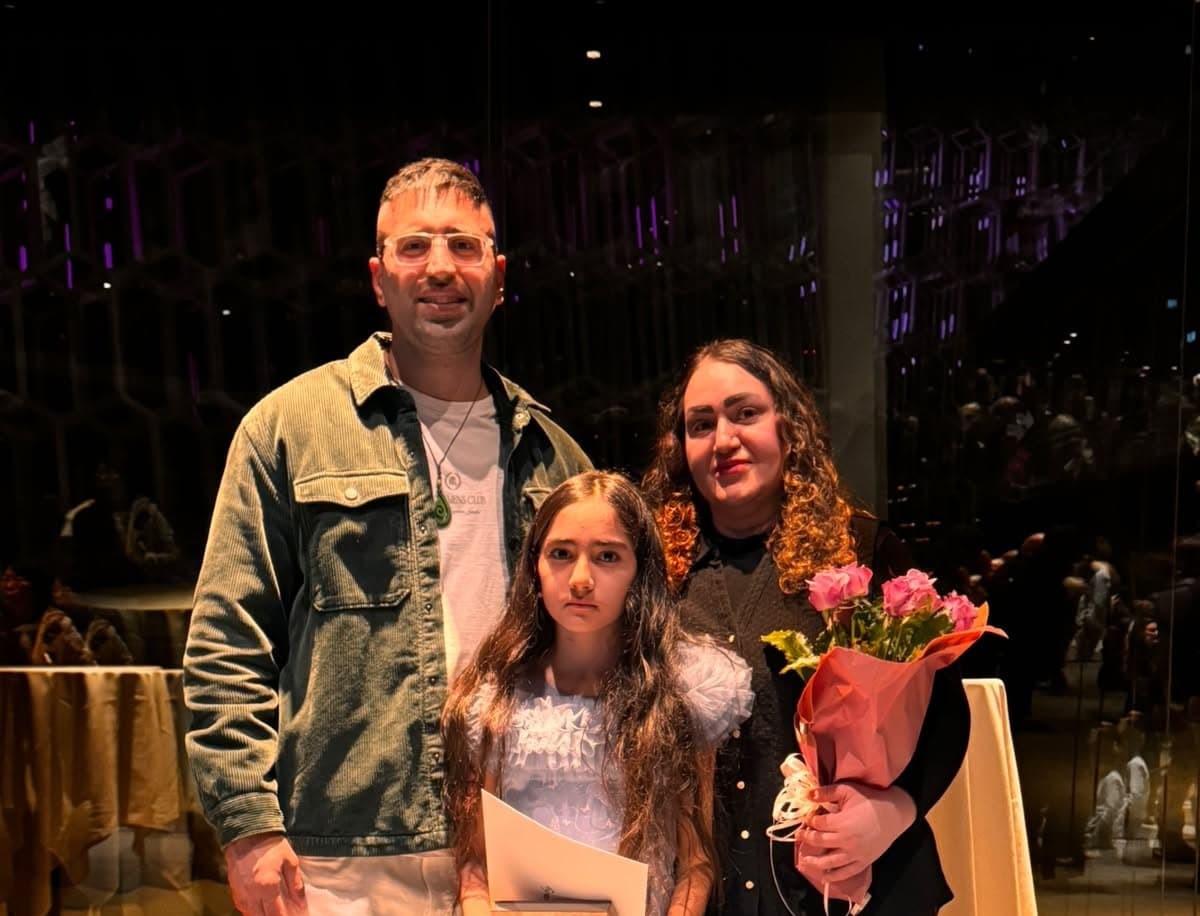
Iranian-Icelandic Student Aysou Mehrabi Recognised at the 2026 Young People’s Icelandic Language Awards
Aysou Mehrabi, an Iranian-Icelandic student, was among 49 students recognised at the 20th Young People’s Icelandic Language Awards ceremony in Reykjavík on 17 November 2026. The ceremony took place at Harpa’s Norðurljós Hall in the presence of Reykjavík Mayor Hildur Björnsdóttir.
Aysou Mehrabi, an Iranian-Icelandic student, was among the students recognised at the 2026 Young People’s Icelandic Language Awards (Íslenskuverðlaun unga fólksins), marking a proud achievement for her family and the Iranian community in Iceland.
The 20th edition of the awards ceremony took place on 17 November 2026, coinciding with Icelandic Language Day, at Harpa’s Norðurljós Hall in Reykjavík. A total of 49 students from Reykjavík primary schools were recognised for their achievements in the Icelandic language.
The awards aim to encourage primary school students to develop an interest in Icelandic and improve their spoken and written communication skills. They also celebrate students who demonstrate dedication to learning and an appreciation of the diversity of the Icelandic language.
Reykjavík Mayor Hildur Björnsdóttir delivered the opening address at the ceremony. The Rimaskóli school choir also performed three songs under the direction of Jóhanna Halldórsdóttir.
Aysou’s recognition represents an encouraging example of the efforts and achievements of young people with Iranian backgrounds in Icelandic society. For children growing up between different languages and cultural backgrounds, developing strong Icelandic language skills plays an important role in education, communication and active participation in their community.
The Iranian Association in Iceland congratulates Aysou Mehrabi and her family on this achievement and wishes her continued success in her education and future cultural and academic endeavours.
Her achievement highlights the valuable contribution and potential of young people of Iranian heritage in Iceland and the importance of supporting the next generation in their educational, linguistic and cultural development.